What Do Colorblind People See?

Most colorblind people see color, just fewer distinct colors. Certain pairs that look clearly different to others, such as red and green or blue and green, look similar or the same. Which colors merge depends on the type of color blindness. Seeing only in shades of gray is rare.

Last updated 2026-11-09

How colorblind people see the world, type by type

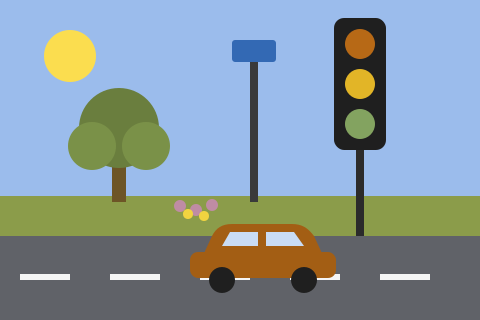
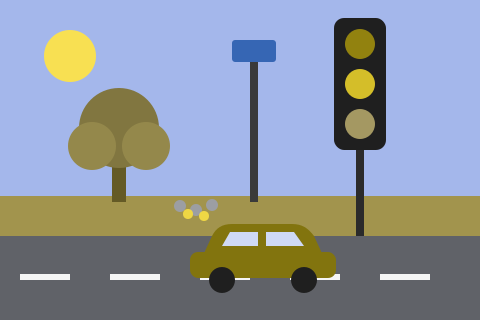
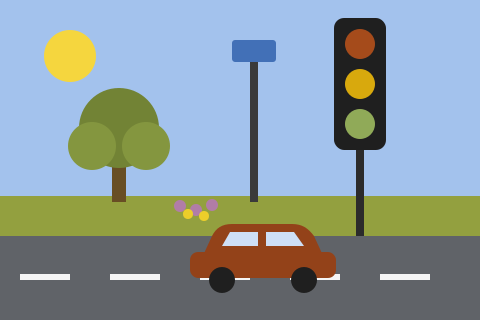
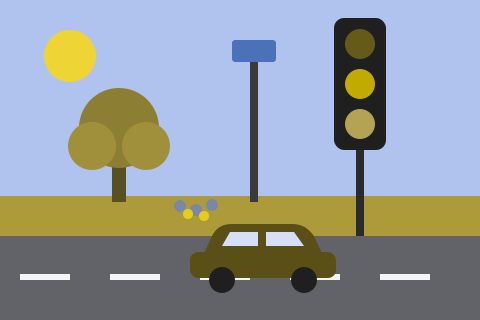
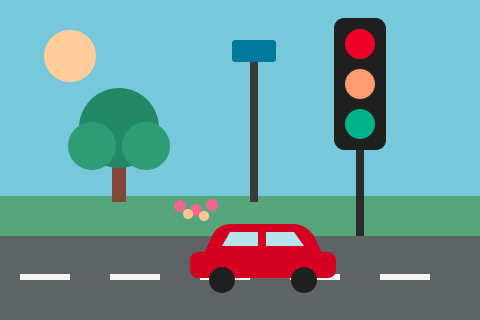
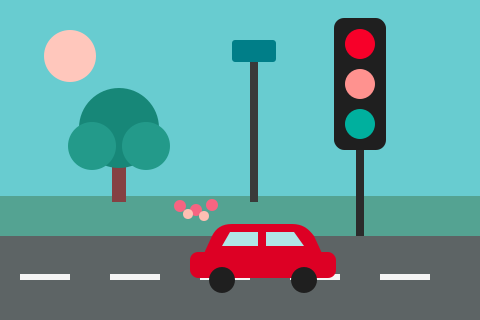
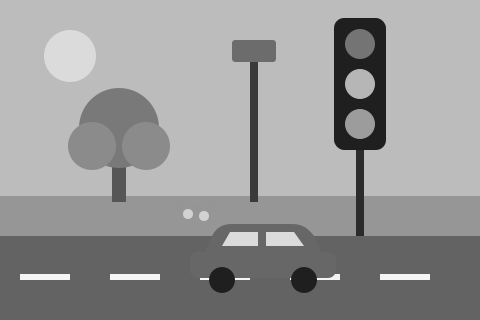
The same street is shown with typical color vision and simulated with every common type of color blindness. Compare the traffic light, the red car, the tree and the sky.
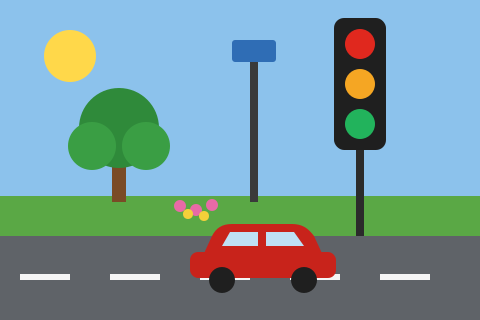
Street scene, typical color vision: A red car, green tree and grass, blue sky and sign, yellow sun, pink and yellow flowers, and a traffic light with red, amber and green lamps lit.Typical color vision
Street scene, simulated moderate deuteranomaly: The red car turns orange-brown, the tree and grass turn olive, and the red and green lamps move closer in color.Simulated moderate deuteranomaly
Street scene, simulated deuteranopia: The red car and the tree turn similar olive tones and the red and green lamps look alike; the blue sky stays blue.Simulated deuteranopia
Street scene, simulated moderate protanomaly: The red car darkens to brown, the greens turn olive and the red lamp looks darker.Simulated moderate protanomaly
Street scene, simulated protanopia: The red car and red lamp turn dark olive brown, close to the tree and grass; the sky stays blue.Simulated protanopia
Street scene, simulated moderate tritanomaly: The sky turns turquoise, the sun and amber lamp turn peach, and the red car stays red.Simulated moderate tritanomaly
Street scene, simulated tritanopia: The sky, tree and green lamp shift toward teal, the sun and amber lamp turn pink, and the red car stays red.Simulated tritanopia
Street scene, simulated achromatopsia (no color): Everything is a shade of gray; the three lamps differ only in brightness.Simulated achromatopsia (no color)
Simulations use the Machado, Oliveira & Fernandes (2009) model; "-anomaly" types are shown at moderate severity. Real experience varies from person to person and with your screen.

What colors do colorblind people see?

TypeColors that look alikeColors that stay clear
Red-green (deutan and protan)Red, green, orange, brown and yellow; purple and blue; pink, teal and grayBlue versus yellow
Blue-yellow (tritan)Blue and green; yellow and pink or light gray; purple and redRed versus green
Complete (achromatopsia)All colors become shades of grayOnly lightness

Red-green color blindness affects about 1 in 12 men and 1 in 200 women of Northern European ancestry, so the first row is what most colorblind people experience. Blue-yellow types affect fewer than 1 in 10,000 people, and complete color blindness is rarer still.

What do colorblind people see red as?
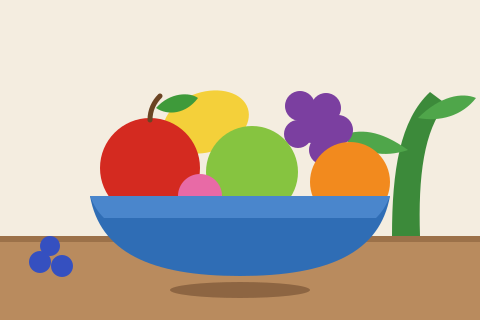
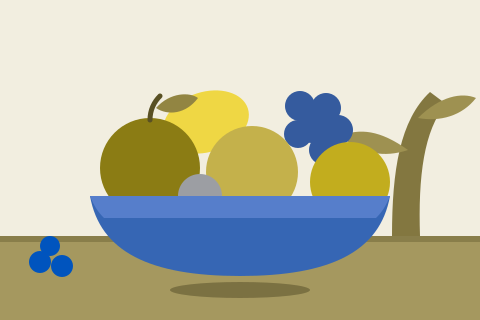
Fruit bowl, typical color vision: A red apple, green apple, yellow lemon, orange, purple grapes, pink peach and blueberries in a blue bowl.Typical color vision
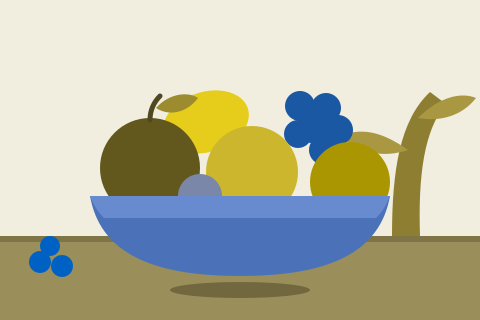
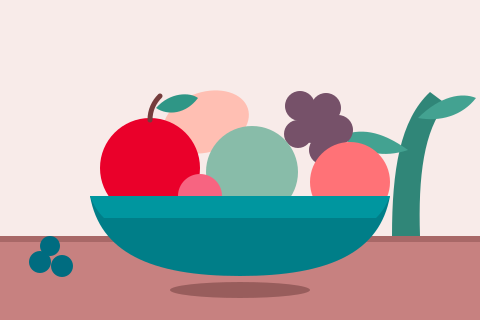
Fruit bowl, simulated deuteranopia: The red and green apples turn similar olive tones, pink turns gray and the purple grapes look blue.Simulated deuteranopia
Fruit bowl, simulated protanopia: The red apple turns dark olive brown, close to the greens; purple looks blue and pink looks grayish blue.Simulated protanopia
Fruit bowl, simulated tritanopia: The blue bowl turns teal, the lemon turns pale pink, the orange looks coral, and red stays red.Simulated tritanopia
Simulations use the Machado, Oliveira & Fernandes (2009) model. Real experience varies from person to person and with your screen.
  • Protan types: red looks darker and browner; deep red can look nearly black. More on protanopia.
  • Deutan types: red keeps its brightness but shifts toward olive or brownish yellow, close to green. More on deuteranopia.
  • Tritan types: red stays red, but yellow can look pink and blue can look teal. More on tritanopia.

How do colorblind people see traffic lights?

In the simulations above, the red and green lamps move closer together with red-green types, and with protan types the red lamp also looks darker. In daily life most people with red-green color blindness use the position of the lit lamp (red at the top of a vertical light, green at the bottom) together with whatever color difference they can see.

Mild vs strong color blindness

Color blindness ranges from barely noticeable to strong. The most common type, deuteranomaly, is often mild: many people only notice it with dark, muted or small areas of color, or when they take a test. In the strongest types (protanopia, deuteranopia, tritanopia) one cone type is missing, so a whole range of colors merges.

How we know: what the simulations can and can’t show

These images use the Machado, Oliveira & Fernandes (2009) model, which builds on earlier work by Brettel, Viénot and Mollon (1997). The models calculate which colors produce the same cone signals for a given type and display them as the same color. That makes them reliable for showing which colors become hard to tell apart. They can’t show exactly how color feels to a particular person, and the result also depends on your screen.

To see your own photos this way, try the color blind simulator. To check your own color vision, take the color blind test.

Take the color blind test

FAQ: how colorblind people see

Do colorblind people see in black and white?

Almost never. Nearly all colorblind people see color; some colors just look more alike. Seeing no color at all (achromatopsia, or complete color vision deficiency) is rare and often comes with other vision problems such as light sensitivity.

What do colorblind people see red as?

It depends on the type. With protan types (protanomaly, protanopia) red looks darker and browner, and deep red can look almost black. With deutan types (deuteranomaly, deuteranopia) red keeps its brightness but moves toward an olive or brownish yellow that is closer to green. With blue-yellow types, red usually looks red.

What do colorblind people see green as?

With red-green types, green moves toward olive, beige or yellowish tones and gets closer to red, orange and brown. With blue-yellow types, green moves toward teal and gets closer to blue.

How do colorblind people see traffic lights?

Many people with red-green color blindness can tell the lamps apart, but some find red and green hard to separate by color alone, especially at night or at a distance. Most rely on position: on a vertical light, red is at the top and green at the bottom.

How do we know what colorblind people see?

Nobody can see through someone else’s eyes, so images like these are models. They calculate which colors produce the same cone signals for a given type and show those colors as identical. They are good at showing which colors become hard to tell apart, but they can’t show exactly how color feels to any one person.

Can colorblind people see more colors with glasses?

Notch-filter glasses can increase contrast between some reds and greens for some people with milder red-green types. They do not create new cone types or restore normal color vision, and results vary from person to person.

Sources

  1. National Eye Institute. Types of color vision deficiency. nei.nih.gov
  2. MedlinePlus Genetics, U.S. National Library of Medicine. Color vision deficiency. medlineplus.gov
  3. Brettel H, Viénot F, Mollon JD. Computerized simulation of color appearance for dichromats. JOSA A. 1997;14(10):2647–2655. doi.org
  4. Machado GM, Oliveira MM, Fernandes LAF. A physiologically-based model for simulation of color vision deficiency. IEEE TVCG. 2009;15(6):1291–1298. (Used for the simulated images.) doi.org
  5. Simunovic MP. Colour vision deficiency. Eye. 2010;24(5):747–755. pubmed.ncbi.nlm.nih.gov

Note: this is a screening, not a diagnosis. Online tests can’t control your screen’s colors or brightness, so confirm any result with an eye care professional. Medical disclaimer · How the test works

More color vision tests