Red-Green Color Blindness
Being red-green colorblind means some reds, greens, oranges and browns are harder to tell apart. It is by far the most common kind of color blindness, and most people who have it still see plenty of color.
Red-green color blindness is an inherited difference in the red-sensitive (L) or green-sensitive (M) cones of the eye. It affects about 1 in 12 men and 1 in 200 women of Northern European ancestry. There are four types, from mild (deuteranomaly, protanomaly) to strong (deuteranopia, protanopia).
Last updated 2026-11-10
What does red-green colorblind look like?
These images show the same street with typical color vision and simulated with each red-green type. Look at the traffic light, the red car and the tree: with the stronger types they move toward similar olive and brown tones, while the blue sky stays clear.
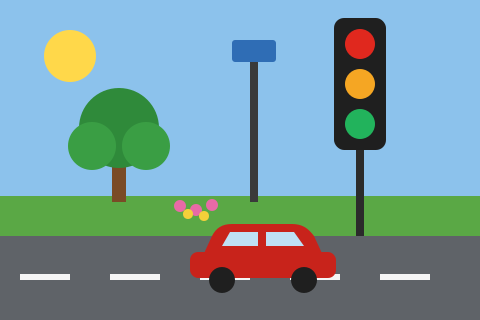 Typical color vision
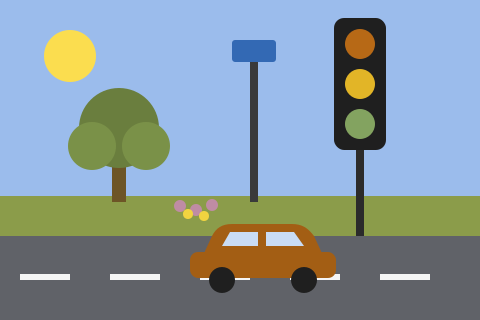 Simulated moderate deuteranomaly
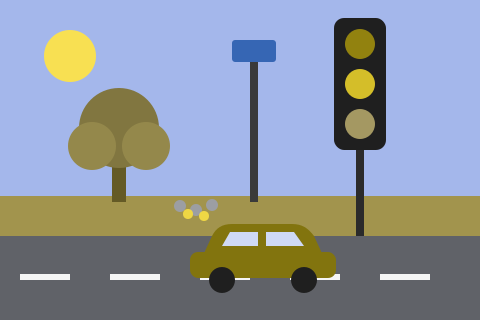 Simulated deuteranopia
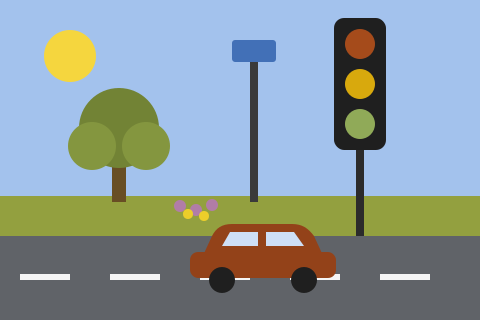 Simulated moderate protanomaly
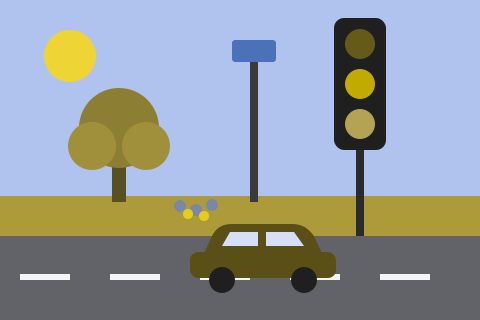 Simulated protanopia
You can run the same filter on your own photos with our color blind simulator, or see more examples in what do colorblind people see.
Red-green colorblind vs normal vision
Typical color vision uses three cone types. Red-green color blindness changes how differently the red- and green-sensitive cones respond, so colors that differ mainly along the red-green direction look more alike.
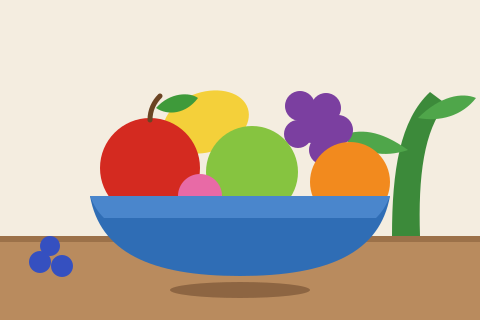 Typical color vision
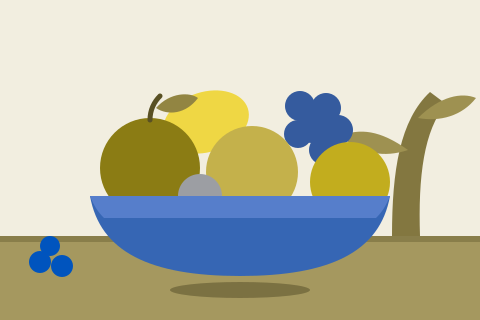 Simulated deuteranopia
- Often confused: red with green, brown or orange; green with yellow or beige; dark red with brown or black (especially protan types).
- Also affected: purple can look blue, and pink or teal can look gray, because their red or green component fades.
- Still clear: blue versus yellow, and differences in lightness.
The four types of red-green color blindness
| Type | What happens | Approx. share of men* |
|---|---|---|
| Deuteranomaly | Green-sensitive cones shifted (mild to strong) | ~5% |
| Protanomaly | Red-sensitive cones shifted; reds look darker | ~1% |
| Deuteranopia | Green-sensitive cones missing or not working | ~1% |
| Protanopia | Red-sensitive cones missing or not working; reds look much darker | ~1% |
*Approximate figures for men of Northern European ancestry (Birch, 2012). Rates are lower in many other populations.
Deutan types (green cones) are about three times as common as protan types (red cones). The main visible difference between the two is brightness: with protan types, reds look darker, so red text or red lights can be harder to notice.
How common is red-green color blindness?
Among people of Northern European ancestry it affects about 1 in 12 men and 1 in 200 women, making it the most common color vision deficiency. Blue-yellow color blindness, by comparison, affects fewer than 1 in 10,000 people.
What causes it?
Almost all red-green color blindness is inherited. The genes for the red and green cone pigments (OPN1LW and OPN1MW) sit next to each other on the X chromosome, and changes in them cause the protan and deutan types. Because it is X-linked, one altered copy is enough in men, while women usually need two, which explains the large difference between men and women. Read more in can women be color blind?
Color vision can also change later in life because of eye disease, some other health conditions or medicines. A new or changing color problem is different from inherited color blindness and should be checked by an eye doctor.
How do you test for red-green color blindness?
Eye care professionals use plate tests (such as Ishihara or HRR plates) and, to tell protan from deutan types and anomalous from complete types precisely, an anomaloscope. Our free red-green color blind test screens for both protan and deutan types and estimates severity in about three minutes.
Glasses, filters and everyday tips
- Color blind glasses: notch-filter glasses can increase red-green contrast for some people with the milder types. They do not restore normal color vision, results vary, and they help least with protanopia and deuteranopia. What the research says about color blind glasses.
- Phone and computer filters: built-in color filters can shift colors to make some red-green differences easier to see.
- Color-identifier apps name the color under your phone camera.
- Labels and patterns: ask for charts, maps and status lights that don’t rely on red versus green alone.
- Traffic lights are usually read by position: on vertical lights, red is at the top and green at the bottom.